
By Lucy Dean Stockton and Monik Slade, with research assistance from Will Carruthers
Since taking office, President Donald Trump aggressively pushed for widespread AI integration to the benefit of not only his campaign and inauguration donors, but his own personal finances.
Trump has invested millions of dollars in Big Tech companies, like Microsoft and Meta, that are all-in on the artificial intelligence boom. And since taking office, he has embraced the Silicon Valley interests and Big Tech moguls that have rallied behind his presidency.
Digging through Trump’s financial disclosures, More Perfect Union also uncovered how Trump stands to financially benefit from all the suppliers that make the data center boom possible.
U.S. companies spent more than $44 billion on data center construction in the first fiscal quarter of 2026. Data center developers hope to build nearly 3,000 more complexes beginning in 2028 — with a $2.48 trillion investment value by the end of the decade.
For the last two years, Trump has been quietly buying up millions in AI industry “stealth buys” — the companies that are essential to build out the AI boom — according to his publicly released financial disclosures. These companies offer specialized construction skills, sell water cooling technology, and supply the fiber optics infrastructure that data centers need to work, among other industry-specific products and services.
All in all, Trump traded stocks in at least 25 companies linked to data center construction or real estate leasing. At the end of last year, Trump had up to $25 million invested in these kinds of firms, and he’s made dozens of trades on them this year while his administration has continued to roll out even more pro-AI policy.
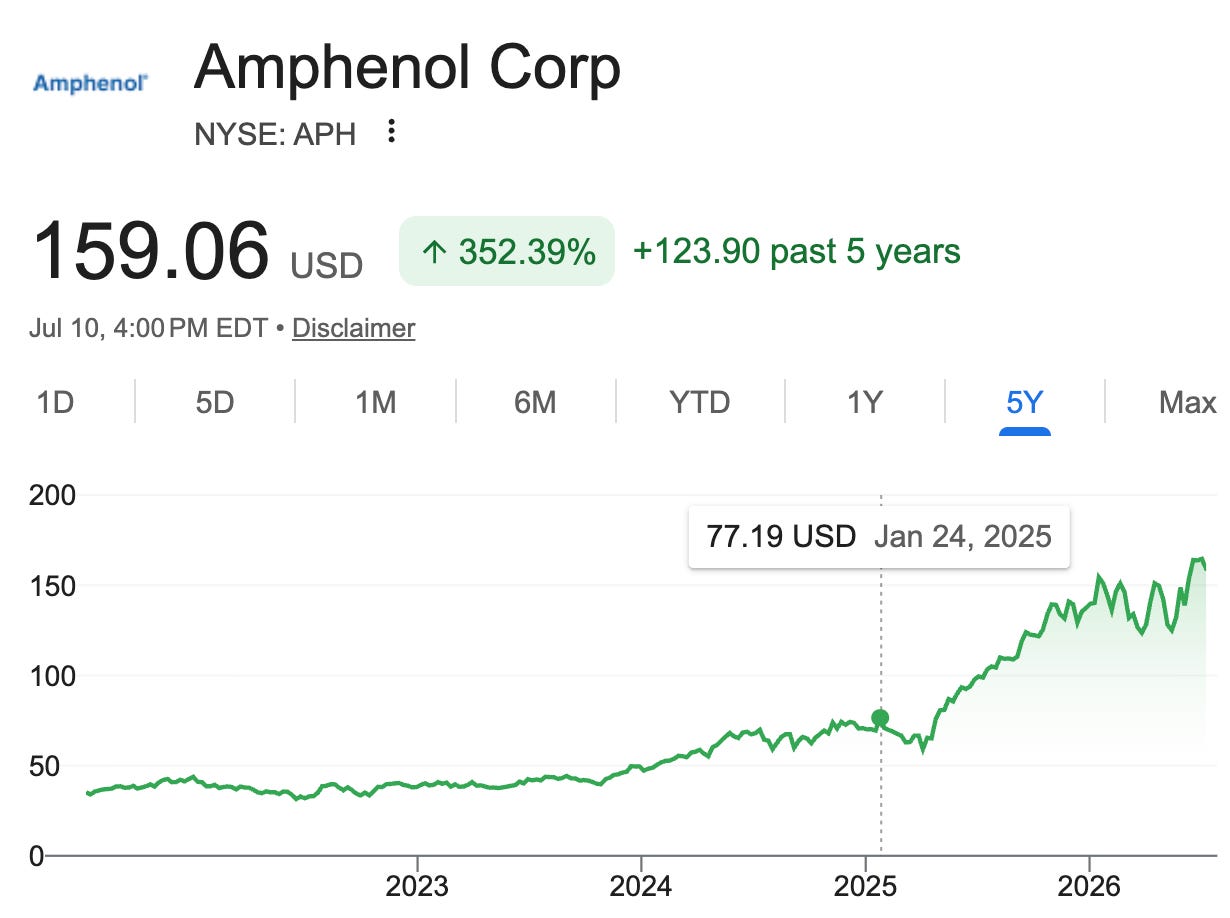
This includes firms like Amphenol, a leading “picks-and-shovels” supplier for AI data centers. This year alone, Trump has bought and sold up to $2.78 million in the company’s stock — and that stock has more than doubled in value since he took office.
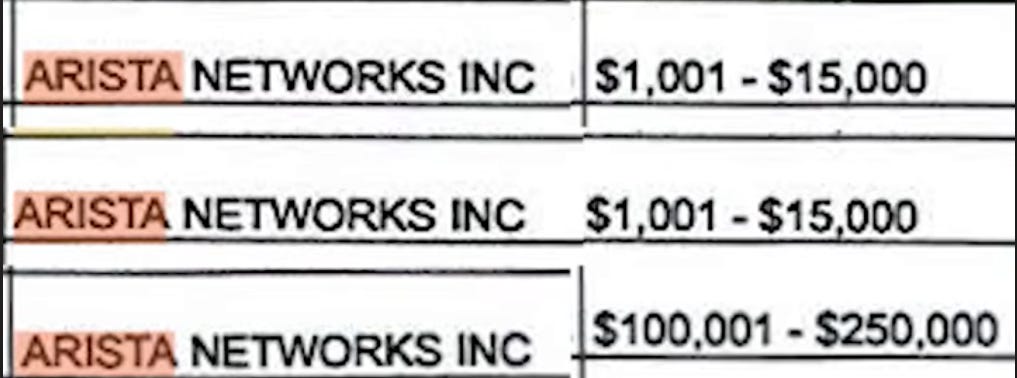
Trump has also invested in Arista Networks, which designs software for Hyperscale Data Center systems. Last year, Trump disclosed owning up to $1.38 million in stock in the company. This year, he’s bought and sold up to $1.6 million more.
Trane, a company that supplies industrial cooling systems for data centers, has also benefited from the boom. Trump owned nearly a million dollars in their stock last year, and traded another half-million so far in 2026.
This pattern follows for AECOM, the same engineering company that designed Trump’s ballroom also designs hyperscale data centers. Trump’s also invested in Texas Instruments, which designs the technology for data centers; Linde PLC, the chemicals company that makes data center fabrication materials; Fortive Corporation, which provides electrical, fiber, and network testing critical to data center operations; Expand Energy Corporation, which is using its Appalachian Basin to produce LNG for data centers, and many others.
Between April and May, Trump purchased four shares in Crown Castle Inc. Crown Castle partnered with Available Infrastructure to build a $5 billion AI-powered cloud storage for data centers called Project Qestrel. By the end of 2026, companies aim to deploy the project at 1,000 sites across 30 states.
Similarly, Trump traded stock in PulteGroup, an Nvidia partner testing a pilot program by the California-based startup SPAN to place mini data center nodes on residential property.
Back in May, Trump purchased stock in Vistra Corporation and Xcel Energy, both of which are involved in upcoming Meta data centers.
Trump maintains that he does not personally make these trades, but has also admitted that his sons are involved in his trades and benefit from insider trading.
Meanwhile, Trump has been directing his agencies to ease federal permitting for data center construction, to allow data centers to build their own gas-fired power plants and to connect to the grid, to skip environmental regulations around clean air and clean water, to be exempted from the same Big Tech-facing tariffs that other industries pay, among other moves.
The AI boom has benefited from the Trump administration’s embrace of the industry and regulatory changes to support that — all while the president himself stands to benefit.